Since I last wrote, I've crossed the second major hurdle in my thesis project: the first round of user testing!!
For the first round of user testing, I visited Dr. Juilee Decker's Visitor Engagement class to gather feedback from a general audience. They evaluated the general design, general functionality, and general content of the app. I got a lot of positive feedback, as well as some helpful constructive criticism, and I'm excited to move forward with the next round of user testing.
My next round of user testing is scheduled for March 9-10, which is very exciting! So far, I only have one confirmed and scheduled volunteer, but I plan on putting out another invitation in the next day or so. I want to keep my user-testing pool small so as to get more in-depth, qualitative feedback, and I have a lot of people who have offered to help me recruit potential user testers, so I'm not too worried.
The last notable update I have is that I've been awarded a COLA Student Research Fund Scholarship to help compensate my partner and app developer Peter! I'm very excited to finally be able to give him something beyond simple credit for all the hard work he has done for me and my thesis.
I'm excited to keep moving forward both with my user testing and with the development of my thesis.
Showing posts with label #RIT. Show all posts
Showing posts with label #RIT. Show all posts
Tuesday, February 26, 2019

Wednesday, January 23, 2019
Back at it again...
Having a break from classes and being able to focus on my thesis and self-care exclusively was refreshing! And, thankfully, I was able to be productive!
Peter Laurin, the app developer I’m collaborating with, was able to finish the main interface for the app over break which is very exciting! I also was able to revise my literature review, flesh out my content outline, and take some time for myself to just relax before I dive back in. I’m excited to get back to work in earnest and get started on the next stage of writing my thesis.
In the next week or so, I would like to create a more in-depth outline and plan out the specifics of each section of my thesis, nail down dates for user testing, and create my user testing evaluation form. With the motivation of various deadlines, I’m sure I’ll be able to get everything done. At this point, I’m feeling very confident with the direction my thesis is taking. The project aspect is nearly complete and I feel like I have a good plan of attack for writing the thesis. It’s pretty freeing when I think about it. I also haven’t started writing in earnest yet… but we are are going to keep out heads up! As I always say: I’m smart, I’m confident, and I can do this!!
I can’t wait to see how my thesis, and my classmates theses, develop over the semester. Good luck!
Wednesday, December 5, 2018
Getting ready for winter break
Instead of wasting my days with Netflix, I hope to be very productive over this winter break!
I have several goals that I hope to accomplish before the end of the break. First, I want to polish off my literature review. I want to add a few more sources that I couldn’t include because I ran out of time, and I’m sure that I will have a lot of feedback to work with after the museum studies faculty review my thesis proposal (yikes!!). Secondly, I would like to schedule a meeting with my thesis advisers so I can make sure I have a good plan of action to complete my thesis and begin a more in-depth outline for the rest of my paper. Hopefully, I can bribe them with coffee so they will meet with me before the semester starts!
The largest goal I hope to accomplish over break is completing all of the elements of my app. My partner Peter and I already have a timeline in place, and thus far we’ve been meeting all of our goals, so I don’t see this being an issue.
Thankfully, I will be working on campus over the break, so I plan to spend at least an hour on campus doing work after I finish my shift. Once I’m in work-mode it’s easier to keep the ball rolling, so I think that this will end up working really well for me. I get out of work in the early afternoon and could easily be home before 5pm every day even after staying to work on my thesis. I also set personal deadlines for myself and use a daily planner, so that organization should help me keep on track and put me in a good place to start the spring semester.
It’s hard to believe I’m essentially halfway finished with my thesis. It’s exciting and nerve-wracking at the same time!
I have several goals that I hope to accomplish before the end of the break. First, I want to polish off my literature review. I want to add a few more sources that I couldn’t include because I ran out of time, and I’m sure that I will have a lot of feedback to work with after the museum studies faculty review my thesis proposal (yikes!!). Secondly, I would like to schedule a meeting with my thesis advisers so I can make sure I have a good plan of action to complete my thesis and begin a more in-depth outline for the rest of my paper. Hopefully, I can bribe them with coffee so they will meet with me before the semester starts!
The largest goal I hope to accomplish over break is completing all of the elements of my app. My partner Peter and I already have a timeline in place, and thus far we’ve been meeting all of our goals, so I don’t see this being an issue.
Thankfully, I will be working on campus over the break, so I plan to spend at least an hour on campus doing work after I finish my shift. Once I’m in work-mode it’s easier to keep the ball rolling, so I think that this will end up working really well for me. I get out of work in the early afternoon and could easily be home before 5pm every day even after staying to work on my thesis. I also set personal deadlines for myself and use a daily planner, so that organization should help me keep on track and put me in a good place to start the spring semester.
It’s hard to believe I’m essentially halfway finished with my thesis. It’s exciting and nerve-wracking at the same time!
Wednesday, November 28, 2018
The evolution of my thesis
Since the first time I voiced my thesis idea, my project changed significantly. Originally, I thought I wanted to create a sensory-friendly toolbox that one could use in any museum across the country. I had a very large, vague and well-intended idea to provide sensory-friendly games on an app that could enable people to experience a museum without having to go during special hours or on certain days of the week. After a lot of discussion with my adviser and app consultant, I realized that making a large, general app containing only games and music wouldn’t be able to accomplish my end goal, and I may not be able to accomplish it period because of the large scope. Now, I’m focusing on creating an app for one area of one museum, Strong Museum of Play, that not only provides games and music, but also a social narrative, a sensory map, and other helpful information about the museum. I also now plan to go beyond just making the app and hope to conduct focus groups where individuals with autism and their family members can interact with the app and give me feedback so I can make suggestions for further improvements.
While much of my project is set in stone and concrete, my final stage, the focus groups, is where I see the project truly evolving. Based on my research, this app should be successful and helpful for people on the spectrum, but I won’t truly know that until I actually have people interact with it. I hope it won’t, but the app could be a failure. As the project moves forward and evolves, this determination will steer my paper in one of two ways: creating an outline of what a successful app for individuals with autism looks like and evaluating the effectiveness of personal technology in helping increase accessibility, or outlining what didn’t work and provide insight from my personal experience on how apps aimed at making museum experiences accessible can be tailored to best serve the intended audience.
The research never ends...
One thing I’ve learned through working on this project is that the research process truly never ends. Every time I think I’m close to being done, I find a few more things that could be improved with more research and more sources.
So far, I've learned a lot through my research, one of the most important things being the intricacies of autism spectrum disorder. Because of my experience interacting with my little cousin Leo, I thought I had learned a lot about what autism spectrum disorder was. However, I truly had no idea about the finer details. I knew that Leo had trouble with communicating, staying focused on the appropriate tasks, and sitting still for too long, but I didn’t know why he has difficulties with these things. Learning about the difficulties people with autism have with sensory processing gave me a concrete answer as to why Leo, and other people on the autism spectrum, have this issues. Knowing why people with autism react negatively to certain stimuli is the only way I can effectively craft an app that helps individuals cope with these negative, overwhelming feelings. Without this knowledge, my project would fall short and seem incomplete.
I still need to learn more about what museums, in particular, are doing for individuals with autism. Thus far, I’ve found a lot of information about sensory friendly days and pre-visit materials the museum provides for families of individuals with autism, but I haven’t found much on the use of technology within a museum to increase accessibility. I’ve found a lot of information about apps and online programs that help facilitate communication and interaction for individuals with autism, but only one of them can specifically operate within the space of a museum. As I continue researching, I hope to find more sources discussing accessible technology for people on the autism spectrum within the space of a museum.
So far, I've learned a lot through my research, one of the most important things being the intricacies of autism spectrum disorder. Because of my experience interacting with my little cousin Leo, I thought I had learned a lot about what autism spectrum disorder was. However, I truly had no idea about the finer details. I knew that Leo had trouble with communicating, staying focused on the appropriate tasks, and sitting still for too long, but I didn’t know why he has difficulties with these things. Learning about the difficulties people with autism have with sensory processing gave me a concrete answer as to why Leo, and other people on the autism spectrum, have this issues. Knowing why people with autism react negatively to certain stimuli is the only way I can effectively craft an app that helps individuals cope with these negative, overwhelming feelings. Without this knowledge, my project would fall short and seem incomplete.
I still need to learn more about what museums, in particular, are doing for individuals with autism. Thus far, I’ve found a lot of information about sensory friendly days and pre-visit materials the museum provides for families of individuals with autism, but I haven’t found much on the use of technology within a museum to increase accessibility. I’ve found a lot of information about apps and online programs that help facilitate communication and interaction for individuals with autism, but only one of them can specifically operate within the space of a museum. As I continue researching, I hope to find more sources discussing accessible technology for people on the autism spectrum within the space of a museum.
Monday, September 10, 2018
Senior Thesis Ideas
Hello there, this is Alexandra once again! I have a bit of a dilemma. There are numerous interests that I have within the museum realm. To name a few topics of interest includes exhibition design, collection care, teaching the importance of history, the subject of Anthropology and Archeology. Alas, the time has come to pick a singular interest of mine and transform it into a research paper and project. I have a few ideas, but I do not know whether they are research worthy thus I am inquiring your help.
My first idea is the need for science museums all across the country, especially in Western New York, to create a new separate museum dedicated its anthropology collection. Cultural groups are often offended with their representation in a place where science experiments are performed. Many museum exhibitions display these cultures only in their primal state. These permanent exhibitions fail to show the evolution from prehistoric to modern day. This issue damages not only the museum’s representation, but it damages its relationship with it, visitors, near and far. With further research, I will explain the positive benefits for museums to collaborate with its cultural communities. Then I would proceed to create a plan on how the science museums in Rochester and Buffalo can successfully build a new institution dedicated explicitly to Anthropology and History.
My last idea revolves around my professional goal to develop a museum from the ground up. As a proud Buffalonian, I understand how important the professional sports teams in my community. The fans have this pure love for the game that we continue to support the team endlessly regardless of poor success. Buffalo has been labeled one of the best fans in America. Therefore, it is in the best interest of the city and the professional team to celebrate their dedicated fans by creating the Buffalo Sports Museum. My research focuses on the benefits of developing a new museum economically, socially, and politically in a city. For the project component of the research, I would create an outline of a 10-year plan. This plan will include finical and funding strategies, building and exhibitions designs, collection management policies, and potential partners. I have recently learned that there is a profound collector that have an impressive collection of Buffalo sports memorabilia that has a “museum” in his basement. Of course, I would reach out to him to collaborate on expanding his vision and make it more accessible for the public.
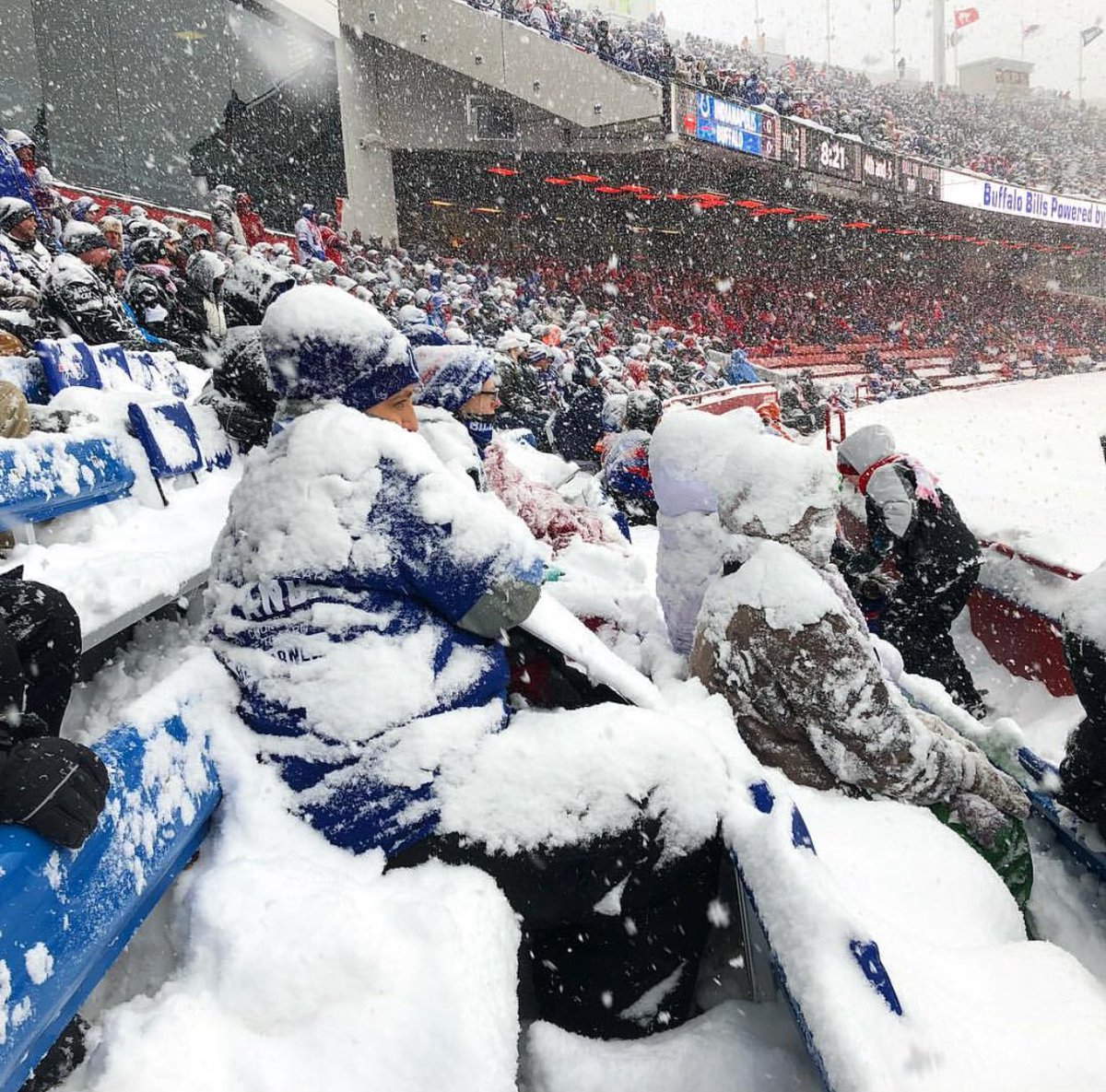 |
| Buffalo Bills fans dedicated to supporting their football team. #Fortheloveofthegame |
Here is the link to the existing Buffalo Sports Museum:
Links of Buffalo Fans professing their love to our teams:
Wednesday, September 5, 2018
Why Museum Studies?
When I was in elementary school, the teachers every year would ask us what we wanted to be when we grow up? My response was not the typical career choices like a doctor or a fireman. Instead, I told my fourth-grade teacher that I wanted to be a historian and scientist working for a well-established museum. Funny how life turns out. From a young age, I was fascinated by how museums transformed history into an interactive and educational exhibition for people of all ages to enjoy. Museums are a place where history comes alive through illuminating stories from artifacts. These stories associated with ancient artifacts is where I fell in love with museums.
Recently, I had the unique opportunity to work abroad for the National Museum of Ireland for the summer. I was assigned to work with the Natural History and Archeology Collections. My boss and I organized, updated, and in some cases reassigning accession numbers to objects hidden in the crypt. Towards the end of my time in Ireland, my boss had me perform a Collections Audit, where a museum personnel goes through the collection and randomly picks out artifacts to see whether it has been updated into the database system. I loved learning about Ireland’s ancient history through the museum’s tremendous collections through performing the audit.

Monday, November 20, 2017
If you give a student a research question, they'll ask for sources and sources and sources...
As the old story goes, if you give a mouse a cookie, he'll ask for milk, and then a straw, and then a napkin, and on and on and on....and this has been what researching for my thesis has been like. A few questions at first have evolved over thirteen weeks into what feels like hundreds, and although I can't answer them all, they have pushed and nudged my thesis into all kinds of different directions.
In the beginning I asked myself, "how do podcasts function in the realm of public history?," and it seemed simple enough. The idea was to figure out what podcasts accomplish, then see if that fits into what public history accomplishes, but I think you can tell where things start getting a little muddy. Public history is something that, through my research, I have come to realize is very malleable and rather undefined. If you break down the term you understand that it quite literally is history, usually applied by historians or academics, made available for the public, but that encompasses so many things! My task then was then not only figuring out the nature of podcasts, but of public history itself.
This has since changed my research from focusing solely on podcasts, their creators, and their applications. It has led me to incorporate ideas on public history; it's history, it's goals, what it is, and what it can be. This is not to say my thesis will now be a manifesto on the nature of public history, but it means that it has gained a more specific angle that I will be approaching the work of podcasts from. This is not so much an evolution of my original question, since it primarily remains the same, but it gives my topic a more defined path to follow. I see it being a lot easier to focus my hundreds of other questions into elements of these two guiding questions: "What are the goals of historically minded podcasts?" and "What are the goals of public history?"
Subscribe to:
Posts (Atom)