Showing posts with label #museumstudies. Show all posts

Friday, August 30, 2019

Hello World!

     Hello, my name is Rachel Baldwin and I am a fourth year Anthropology/Sociology and Museum Studies double major. I'm interested in history, science, and technology museums and how they engage visitors. It's interesting how they handle visitors of different ages, ethnicities, and abilities. I'm also interested in socioeconomic inequality and immigration in the US. I've also held and interest in LGBTQ+ studies and gender studies. Outside of my majors, I love to do martial arts, watch cartoons and shows, and paint on occasion. 
     I'm still very new to the Museum Studies field, but I've had a little experience to help me. This past summer, I had an internship with the Genesee Country Village and Museum (GCV&M). I worked in collections cataloging new acquisitions, inventorying the collection, taking photographs of objects, helping to create a public digital database, moving objects, and doing minor cleaning and polishing of objects. I also had the opportunity to write a small essay about an object of my choosing, a police lantern, that was posted to a social media blog. I was lucky to have interned there and I learned so much about working in a museum, the GCV&M helped me so much! I've also taken a class called the Legal and Ethical Issues of Collecting which taught me many of the skills I used in my internship and helped me contextualize the work I did. Below is an image of the Wehle Galley at GCV&M.

Wednesday, March 20, 2019

Almost there!

I'm both excited and nervous that our first full draft of our theses are due next week. Excited because it means I'm almost done, but nervous because I have SO much to do before I'm finished. I know one thing for sure: my social life is going to be nonexistent until March 28th.

Daunting deadline aside, I'm very happy with my progress. I've completed both of my user tests and got nothing but positive feedback on the design and content of my app (now renamed to "Sense Ease: Strong Museum" after user feedback). I have scheduled follow-up interviews with each family, and I'm looking forward to hearing more about their past experiences at museums, and how they think this app can be improved to be more a more effective tool for individuals on the autism spectrum.

I have all the materials I need, it just needs to be put down on paper; which is almost the hardest part of the whole experience. I can't wait to see how it all shapes up. :)

Send positive vibes to the museum studies senior thesis students!! We all need it. 

Tuesday, February 26, 2019

Exciting progress with app development and user testing

Since I last wrote, I've crossed the second major hurdle in my thesis project: the first round of user testing!!

For the first round of user testing, I visited Dr. Juilee Decker's Visitor Engagement class to gather feedback from a general audience. They evaluated the general design, general functionality, and general content of the app. I got a lot of positive feedback, as well as some helpful constructive criticism, and I'm excited to move forward with the next round of user testing.

My next round of user testing is scheduled for March 9-10, which is very exciting! So far, I only have one confirmed and scheduled volunteer, but I plan on putting out another invitation in the next day or so. I want to keep my user-testing pool small so as to get more in-depth, qualitative feedback, and I have a lot of people who have offered to help me recruit potential user testers, so I'm not too worried. 

The last notable update I have is that I've been awarded a COLA Student Research Fund Scholarship to help compensate my partner and app developer Peter! I'm very excited to finally be able to give him something beyond simple credit for all the hard work he has done for me and my thesis. 

I'm excited to keep moving forward both with my user testing and with the development of my thesis.

Wednesday, January 23, 2019

Back at it again...

Having a break from classes and being able to focus on my thesis and self-care exclusively was refreshing! And, thankfully, I was able to be productive!

Peter Laurin, the app developer I’m collaborating with, was able to finish the main interface for the app over break which is very exciting! I also was able to revise my literature review, flesh out my content outline, and take some time for myself to just relax before I dive back in. I’m excited to get back to work in earnest and get started on the next stage of writing my thesis.

In the next week or so, I would like to create a more in-depth outline and plan out the specifics of each section of my thesis, nail down dates for user testing, and create my user testing evaluation form. With the motivation of various deadlines, I’m sure I’ll be able to get everything done. At this point, I’m feeling very confident with the direction my thesis is taking. The project aspect is nearly complete and I feel like I have a good plan of attack for writing the thesis. It’s pretty freeing when I think about it. I also haven’t started writing in earnest yet… but we are are going to keep out heads up! As I always say: I’m smart, I’m confident, and I can do this!!

I can’t wait to see how my thesis, and my classmates theses, develop over the semester. Good luck!

Wednesday, December 5, 2018

Getting ready for winter break

Instead of wasting my days with Netflix, I hope to be very productive over this winter break!

I have several goals that I hope to accomplish before the end of the break. First, I want to polish off my literature review. I want to add a few more sources that I couldn’t include because I ran out of time, and I’m sure that I will have a lot of feedback to work with after the museum studies faculty review my thesis proposal (yikes!!). Secondly, I would like to schedule a meeting with my thesis advisers so I can make sure I have a good plan of action to complete my thesis and begin a more in-depth outline for the rest of my paper. Hopefully, I can bribe them with coffee so they will meet with me before the semester starts! 

The largest goal I hope to accomplish over break is completing all of the elements of my app. My partner Peter and I already have a timeline in place, and thus far we’ve been meeting all of our goals, so I don’t see this being an issue.

Thankfully, I will be working on campus over the break, so I plan to spend at least an hour on campus doing work after I finish my shift. Once I’m in work-mode it’s easier to keep the ball rolling, so I think that this will end up working really well for me. I get out of work in the early afternoon and could easily be home before 5pm every day even after staying to work on my thesis. I also set personal deadlines for myself and use a daily planner, so that organization should help me keep on track and put me in a good place to start the spring semester. 

It’s hard to believe I’m essentially halfway finished with my thesis. It’s exciting and nerve-wracking at the same time!

Thursday, November 29, 2018

Thesis so far.

This has certainly been a wild ride. I've often been finding myself getting extremely caught up into the inner workings of an early thriving and functioning underground metal scene and breaking down the culture and processes of the genre and how it has evolved that I often forget to explain the simplest of things like differences between sub genres or names of bands. It is a whirlwind of information on a topic that has largely existed through means of oral history and word of mouth. Still it has been a lot of fun to research for sure. I've been an active part of the metal scene since I was a teenager and I'm still learning new things.
I am hoping to add to a subject with little to no prior scholarship. As states previously the genre has largely functioned and thrived on word of mouth and oral tradition so not much has been written down. For a genre that has existed since roughly 1965-1967 it's surprising that not much has been written down, or at least to me it is. I am hoping that this thesis can actually evolve into an actual museum down the line, but until then I still have a lot of work to do!

Wednesday, November 28, 2018

The evolution of my thesis

Since the first time I voiced my thesis idea, my project changed significantly. Originally, I thought I wanted to create a sensory-friendly toolbox that one could use in any museum across the country. I had a very large, vague and well-intended idea to provide sensory-friendly games on an app that could enable people to experience a museum without having to go during special hours or on certain days of the week. After a lot of discussion with my adviser and app consultant, I realized that making a large, general app containing only games and music wouldn’t be able to accomplish my end goal, and I may not be able to accomplish it period because of the large scope. Now, I’m focusing on creating an app for one area of one museum, Strong Museum of Play, that not only provides games and music, but also a social narrative, a sensory map, and other helpful information about the museum. I also now plan to go beyond just making the app and hope to conduct focus groups where individuals with autism and their family members can interact with the app and give me feedback so I can make suggestions for further improvements.

While much of my project is set in stone and concrete, my final stage, the focus groups, is where I see the project truly evolving. Based on my research, this app should be successful and helpful for people on the spectrum, but I won’t truly know that until I actually have people interact with it. I hope it won’t, but the app could be a failure. As the project moves forward and evolves, this determination will steer my paper in one of two ways: creating an outline of what a successful app for individuals with autism looks like and evaluating the effectiveness of personal technology in helping increase accessibility, or outlining what didn’t work and provide insight from my personal experience on how apps aimed at making museum experiences accessible can be tailored to best serve the intended audience.

The research never ends...

One thing I’ve learned through working on this project is that the research process truly never ends. Every time I think I’m close to being done, I find a few more things that could be improved with more research and more sources.

So far, I've learned a lot through my research, one of the most important things being the intricacies of autism spectrum disorder. Because of my experience interacting with my little cousin Leo, I thought I had learned a lot about what autism spectrum disorder was. However, I truly had no idea about the finer details. I knew that Leo had trouble with communicating, staying focused on the appropriate tasks, and sitting still for too long, but I didn’t know why he has difficulties with these things. Learning about the difficulties people with autism have with sensory processing gave me a concrete answer as to why Leo, and other people on the autism spectrum, have this issues. Knowing why people with autism react negatively to certain stimuli is the only way I can effectively craft an app that helps individuals cope with these negative, overwhelming feelings. Without this knowledge, my project would fall short and seem incomplete.

I still need to learn more about what museums, in particular, are doing for individuals with autism. Thus far, I’ve found a lot of information about sensory friendly days and pre-visit materials the museum provides for families of individuals with autism, but I haven’t found much on the use of technology within a museum to increase accessibility. I’ve found a lot of information about apps and online programs that help facilitate communication and interaction for individuals with autism, but only one of them can specifically operate within the space of a museum. As I continue researching, I hope to find more sources discussing accessible technology for people on the autism spectrum within the space of a museum.

Friday, October 5, 2018

A new challenge!

So, my thesis topic has changed and I will be focusing on something new.
My topic will be focusing on the impact of Heavy Metal (the music not actual heavy metals) on Cultural Heritage and Tourism and how museums can be used in the process. I've seen a lot of work on how Cultural Heritage has impacted the Metal subgenre but not much about the other way around. Since it's introduction in the mid 1960's the music and scene has become a cultural phenomenon around the world. Because of this certain sites focused around metal and its history have gained popularity and have become prime tourist spots in different countries. Also to help sustain tourism European open air festivals have been put in areas where there often is little to no tourism, bringing in thousands of people from around the world to one location. Also how Heavy Metal has become known as cultural heritage in different areas. Looking into a museum in Birmingham United Kingdom and a restaurant in Chicago Illinois and how they have turned Heavy Metal into Cultural Heritage.


Thursday, September 27, 2018

Articles on the Lenape

The two articles I read were in regards to the Lenni Lenape and the Nanticoke natives. The first article titled "Strategies for Survival: The Nanticoke Indians in a Hostile World" which was published in 1979. The second article was published in 2017 from a Widener law student titled "Utilizing Dignity Rights to Further Tribal Prerogatives: The Lenape Indian Tribe of Delaware." Reading these two articles juxtapositioned against one another gave a more concrete passage of time in the struggles both the Lenni Lenape and the Nanticoke face and are still facing.

Considering one article is more styled as a law document and the other being more of a historical document, the styles of writing were extremely different. That being said they're both equally important to one another to paint a more clear and concise picture to the reader about the tribes. Also the considerable amount of time between both of the articled being written puts a lot about the Tribes into perspective regarding their welfare, history, and future.


Bibliography:
1.  Delaware Chief addressing his people, an 18th century painting courtesy of: http://explorepahistory.com/displayimage.php?imgId=1-2-88C
2. Porter, Frank W. “Strategies for Survival: The Nanticoke Indians in a Hostile World.” Ethnohistory 26, no. 4 (1979): 325–45. https://doi.org/10.2307/481364.
3. Roland, Dean. “Utilizing Dignity Rights to Further Tribal Prerogatives: The Lenape Indian Tribe of Delaware,” n.d., 26.

Wednesday, September 26, 2018

My relationship with academic writing

Up to this point in the semester, much of our time has been spent coming up with thesis topics and learning more about the general format of academic articles. Now, we get to get our hands dirty with research of our own!

There are three key things I’ve taken away from reading academic articles in preparation for my thesis. The first, presentation is just as important as content. One can have the most exciting and innovative findings in the world, but if the findings are buried in unlabeled charts and figures or hidden in long, dense paragraphs, the point gets lost. For example, I read a paper from the International Journal of Interactive Mobile Technologies, “Fill Me App: An Interactive Mobile Game Application for Children with Autism,” which had a lot of amazing content and an interesting subject, but it was difficult to read and the provided charts and figures were rather vague.
Taken from "Fill Me App: An Interactive Mobile
Game Application for Children with Autism."

The second takeaway seems rather obvious, but I learned that having a clear and defined structure for a research paper is highly important. Having a clean structure can allow for better readability, and can allow readers to scan and focus on key points to help understand the article.

The third takeaway is more specific to my topic of study for my thesis. For articles relating to the interaction between individuals with autism and technology in the space of a museum, case studies seem to be the most effective form of evidence. Another article I read, “Educational and digital inclusion for subjects with autism spectrum disorders in 1:1 technological configuration,” effectively used case study evidence throughout the article and, in my opinion, it made each of their assertions easier to understand. For each point they made about the interaction between an autistic child and a certain type of technology, the writers would include an anecdote from their research pertaining to a specific child involved in the study. I think this is a technique I may carry over into my own thesis.

As I've read more museum studies research articles,  I discovered that they don’t all follow the same format or style, which surprised me. Throughout my time as a student, much of my experience with scholarly articles related to museums can be summed up in three words: dense, heavy essays. However, reading more contemporary work has shown me that the academic writing for museum studies can be just as diverse as the field itself. I look forward to making my own contributions to the field.

1. Marylene S. Eder, John Maruel L. Diaz, Joanne Ruth S. Madela, Marife U. Mag-usara
and Dhally Dith M. Sabellano, “Fill Me App: An Interactive Mobile Game Application for Children with Autism,” International Journal of Interactive Mobile Technologies 10, no. 3 (2016): 56-63.

2. Lucila Maria Costi Santarosa and Debora Conforto, “Educational and digital inclusion for subjects with autism spectrum disorders in 1:1 technological configuration,” Computers in Human Behavior 60 (2016): 293-300.

Wednesday, September 12, 2018

Improving the museum experience for children with autism

For my thesis, I want to explore how to create a sensory-friendly museum experience for children with autism without making a separate and inherently different experience from neuro-typical children. The inspiration behind my thesis is my little cousin Leo. He was diagnosed as being on the autism spectrum a few years ago.

Leo loves to learn and often is very hands-on when he discovers new things. I thought he would love Strong Museum, but I didn't think about the sensory overload that would happen as soon as we walked in the door. We were in and out in about an hour and I felt horrible.

I wanted him to have the chance to explore a museum that brought me joy when I was younger, but without an established sensory-friendly day for children with autism* I was at a loss of what to do. However, it got me thinking: what if there was a way I could create a sensory-friendly experience that could be had at any time using a personal device? It would be fairly accessible, it could be adjusted to individual preferences based on what the child is sensitive to and it wouldn't necessarily involve a lot of cost in regards to technology once the app or program is created.

Ideally, I would like to create a prototype for this app, detail the process of creating and curating the content and craft my thesis around the following questions: Can museums use personal devices to create a more inclusive, sensory-friendly visitor experience for children on the autism spectrum? Rather than creating a separate experience for children on the autism spectrum, could personal devices allow a sensory-friendly visitor experience within the museum's regular hours of operation?

I'm excited about pursuing this topic. Any feedback is welcomed and appreciated!

Thanks for reading!

*Strong has piloted a program called Sensory-Friendly Sundays this year. At the time of my initial visit with Leo, this option was unavailable to me.

Combining Museum Studies and DHSS

As I mentioned in my last blog post, I'm hoping to combine my Museum Studies senior thesis with my DHSS Capstone project.  Because of this, I'd ideally like to do some sort of project that incorporates DHSS elements with Museum Studies concepts, and then write my thesis about the process of working on that project.  So far, I have one idea on how to do this, but I'd love feedback or any other suggestions if anyone has them!
My idea for a DHSS/Museum Studies project would be a visitor engagement project centered around 3D scans and printing.  As we've all discussed before in our classes, visitors have a desire to touch items that they encounter in museums, but due to the nature of these objects, that usually isn't possible.  We've also discussed before the idea of scanning and then 3D printing objects so that visitors could physically engage with them, and how that might enhance the visitor experience.  For my thesis, I was thinking of actually putting this idea into action: would placing a 3D scanned and printed version of a museum object near that object in an actual museum enhance the visitor experience?  Would it retract from it?
The process for this project would involve me finding a willing institution, either at RIT or in the area, that is willing to let me 3D scan and then print one of the items in their collection.  RIT has the tools to do this on campus, and I know people who would be able to assist me with this part of the project.  From there, I'd place my 3D print of the object near where the original object is displayed, and do a visitor engagement study into how this affects the museum experience.
My main concern with this project is whether or not it incorporates enough DHSS ideas to be able to count for that degree as well as Museum Studies.  I'd need to go and talk to program heads and advisers if I decide to make this project a reality, but I'm thinking I could also create some online component to the experience in order to bring more DHSS elements into it.  Maybe a project website or a separate blog tracking its progress, or the creation of an online questionnaire for the visitor survey portion of it.
I don't have this idea fully thought out right now, so if anyone has any suggestions or comments on it I'd love to hear them!! 

Thesis Idea and Case Study

Hello! I'm Kaye Knoll and my thesis is focused on a case study on Ganondagan: how they came to be what they are today, and how that can be applied to be used for the Delaware Native Americans. I will be looking into the history, policies, and process that made Ganondagan what it is today. The presence of Native American tribes in Delaware are practically non existent and there is not much information or resources about them in the state. Also I am not positive it is mandatory in the Delaware state curriculum to teach about them, thus why I was not personally exposed to the information and am frustrated that I wasn't. I want to help preserve these tribes history, languages, and cultures and to be able to make the information more widely available and accessible to Delawareans across the state.

http://www.nanticoke-lenape.info/
http://ganondagan.org/

Monday, September 10, 2018

Senior Thesis Ideas

Hello there, this is Alexandra once again! I have a bit of a dilemma. There are numerous interests that I have within the museum realm. To name a few topics of interest includes exhibition design, collection care, teaching the importance of history, the subject of Anthropology and Archeology. Alas, the time has come to pick a singular interest of mine and transform it into a research paper and project. I have a few ideas, but I do not know whether they are research worthy thus I am inquiring your help. 
    My first idea is the need for science museums all across the country, especially in Western New York, to create a new separate museum dedicated its anthropology collection. Cultural groups are often offended with their representation in a place where science experiments are performed. Many museum exhibitions display these cultures only in their primal state. These permanent exhibitions fail to show the evolution from prehistoric to modern day. This issue damages not only the museum’s representation, but it damages its relationship with it, visitors, near and far. With further research, I will explain the positive benefits for museums to collaborate with its cultural communities. Then I would proceed to create a plan on how the science museums in Rochester and Buffalo can successfully build a new institution dedicated explicitly to Anthropology and History. 
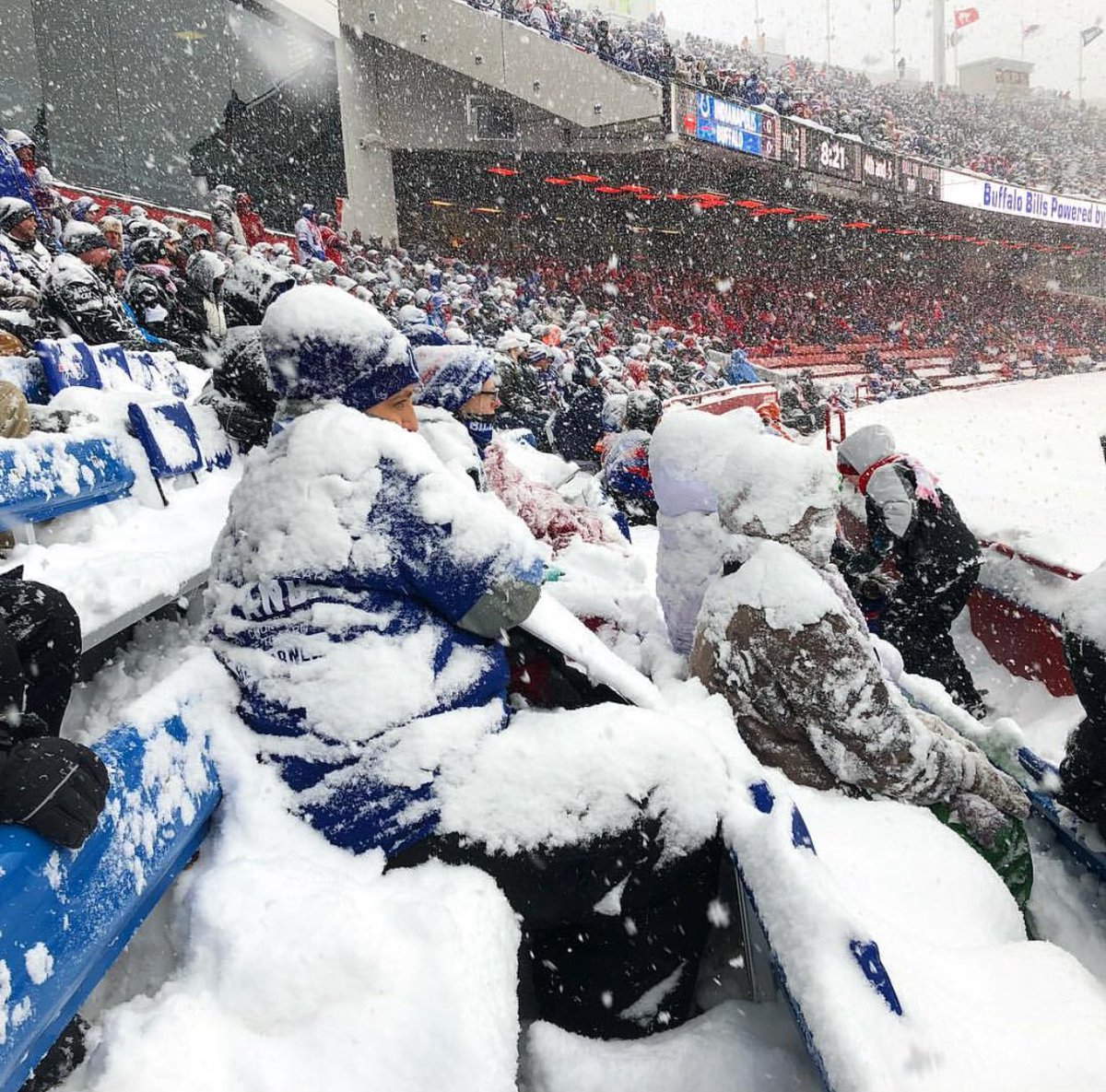
    My last idea revolves around my professional goal to develop a museum from the ground up. As a proud Buffalonian, I understand how important the professional sports teams in my community. The fans have this pure love for the game that we continue to support the team endlessly regardless of poor success. Buffalo has been labeled one of the best fans in America. Therefore, it is in the best interest of the city and the professional team to celebrate their dedicated fans by creating the Buffalo Sports Museum. My research focuses on the benefits of developing a new museum economically, socially, and politically in a city. For the project component of the research, I would create an outline of a 10-year plan. This plan will include finical and funding strategies, building and exhibitions designs, collection management policies, and potential partners. I have recently learned that there is a profound collector that have an impressive collection of Buffalo sports memorabilia that has a “museum” in his basement. Of course, I would reach out to him to collaborate on expanding his vision and make it more accessible for the public.

Related image
Buffalo Bills fans dedicated to supporting their football team. #Fortheloveofthegame

Here is the link to the existing Buffalo Sports Museum: 

Links of Buffalo Fans professing their love to our teams:

Thursday, September 6, 2018

Museum Studies and Hulabaloo

I've loved museums since I was a young kid. Coming from the Philadelphia area I grew up being dragged around center city from the Liberty Bell to the Philadelphia Art Museum. Colonial history and living history museums never interested me as a kid, I grew to love them as an adult. However I always loved my trips to Art museums and Natural History museums. Those were always my favorite trips growing up. My grandmother and I would always take one annual trip to New York when I was growing up and we would always visit at least one museum. So I was fairly accustomed to the idea of museums from a young age and the importance of them. Now as an adult (student) I moved 2,000 miles away to pursue a degree pathway to working in and around museums and museum environments. I'd say that move was worth it. Now on my birthday every year I visit a different museum, So far that has been going well!
As for living history interests, well that ended up becoming a hobby. While in Texas I joined the SCA (Society for Creative Anachronism) and took up archery and fencing. After two wrist surgeries I stopped fencing but I still to archery! Back to my point, the group that I did archery with used to do demonstrations and workshops on medieval society and would teach families archery at them. I got to participate in a couple and they are very fun! Attached is not a photo from the event, but from practice. :)

Wednesday, September 5, 2018

Why Museum Studies?


When I was in elementary school, the teachers every year would ask us what we wanted to be when we grow up? My response was not the typical career choices like a doctor or a fireman. Instead, I told my fourth-grade teacher that I wanted to be a historian and scientist working for a well-established museum. Funny how life turns out. From a young age, I was fascinated by how museums transformed history into an interactive and educational exhibition for people of all ages to enjoy. Museums are a place where history comes alive through illuminating stories from artifacts. These stories associated with ancient artifacts is where I fell in love with museums. 
Recently, I had the unique opportunity to work abroad for the National Museum of Ireland for the summer. I was assigned to work with the Natural History and Archeology Collections. My boss and I organized, updated, and in some cases reassigning accession numbers to objects hidden in the crypt. Towards the end of my time in Ireland, my boss had me perform a Collections Audit, where a museum personnel goes through the collection and randomly picks out artifacts to see whether it has been updated into the database system. I loved learning about Ireland’s ancient history through the museum’s tremendous collections through performing the audit.

Image result for National museum of Ireland

Why I chose Museum Studies and Biology

Hello, my name is Katherine Hensel, and I am beginning my thesis journey, aka beginning the end of my college experience. Even while applying to colleges I knew I wanted a career as an Interpretive Park Ranger. This goal led me to choose to major in Biology and Museum Studies with a History minor at RIT. I have always been passionate about history and the environment. Hiking and camping have been a constant in my life, first with family and friends, and then later with the RIT Outing Club. I have been visiting National Parks for as long as I can remember and I want to contribute to "America's Best Idea," as Ken Burns put it. At RIT, the Museum Studies program have enhanced and developed my interest in education and interpretation. The faculty have pushed me from just wanting to understand and share, to pursuing the best educational methods in order to communicate ideas with the public.

2008 Bryce Canyon National Park
2010 Arches National Park
2013 Yellowstone National Park

2014 Grand Canyon National Park

2015 Jewel Cave National Monument

2015 Mount Rushmore National Memorial


Tuesday, September 26, 2017

Lessons in Research, Both Old and New


Prior to taking this class, I have had some experience with literature reviews as well as ideas related to close reading. I had spent one summer in 2015 gathering and reviewing articles related to disaster management simulations and the evaluation of pedagogic components of games. At the summer's conclusion, I wrote two literature reviews that would eventually become the basis for the chapter, "GIS and Serious Games" in the book Comprehensive Geographic Systems. For the research component, I was taught to condense my notes regarding literature into separate slides, where I would write a few quotes or key points. This way, I could easily extract them later if I wanted to use them in my paper. 

It turns out this method was quite helpful for me and I do not believe the research approach is much different for the field of museum studies. However, this class has taught me useful strategies for better optimizing my close reading. I particularly like the way we approach the dissection of articles by determining the question, methodology, evidence, and conclusion. This approach has helped me better understand research methodologies (namely qualitative ones) and also makes it easier for me to compare articles and their arguments side by side. Closely scrutinizing evidence has also helped me more clearly see the flaws in the author's arguments. For example, for this week I read the article "“Aesthetic Regard for Nature in Environmental and Land Art” by Emily Brady. Although I felt her argument defending land art was solid, closely examining the evidence revealed that she may have relied too much on artist testimony.This class has additionally helped with locating resources and better managing them via Zotero. Previously, I had mainly settled for vague keywords and sometimes less than stellar databases. For my paper, I expect to integrate my previous experiences with the lessons I have recently learned to best optimize the research process. 


B. Tomaszewski, A. Konovitz-Davern, D.I. Schwartz, J. Szarzynski, L. Siedentopp, A. Miller, J. Hartz, GIS and Serious Games, in: T.J. Cova, M.-H. Tsou (Eds.) Comprehensive Geographic Information Systems, Elsevier, 2017, pp. 15 pages.

Brady, Emily. "Aesthetic regard for nature in environmental and land art." Ethics Place and Environment (Ethics, Place & Environment (Merged with Philosophy and Geography)) 10.3 (2007): 287-300.

Musings on Museum Studies Research Methods and Close Reading

Before starting this class, I had a vague recollection of what close reading was.  I say a ‘vague recollection,’ because I’m fairly certain we covered close reading in a class in high school-- and then I never thought about it again.  This is because, at the time, it seemed like a colossal waste of time.  I’ll admit that sometimes it still does, especially when I know that I’m looking at a source solely to glean a single, specific fact or piece of evidence to support my argument or idea.  However, in light of the work we have been doing on close reading over the past few weeks, I can see its value in some situations.  For example, I frequently use academic search engines such as ProQuest to locate articles and texts to use for papers and projects.  However, as we all know, while search engines can be wonderful tools that save us time we would otherwise spend searching through every publication known to man for one article that suits our needs, there’s still a necessary element of human evaluation that is required after they return our search results.  Keyword searching, even with the use of parenthesis and modifiers (e.g. AND/OR), is an imperfect science.  For instance, for my thesis research I have tried every combination and permutation of “science museum/centre” and “history exhibit” that I can think of.  And of course, these searches have turned up hundreds of well-written scholarly articles that happen to feature those phrases… and have absolutely no relevance to my topic.  Some of these articles even have titles that appear to be relevant, like Alan Friedman’s October 2010 Physics Today article entitled “The Evolution of the Science Museum,” which, unfortunately for me and my work, covers more of a shift in visitor groups than in the types of content displayed.  I wouldn’t have known this, however, unless I performed a close reading of the article and determined that Friedman’s research question was something akin to “who were-- and are-- science museums for?” rather than, “how did the content displayed my science museums shift?” as I had hoped.1  In this way, close reading has helped me to weed out the works that are not appropriate (leaving me with disappointingly little to work with at the moment), which ultimately saves me the time and eventual headache when I realize that what I thought was an appropriate source actually isn’t.

Aside from those revelations about close reading, what has struck me the most about researching for museum studies is that it differs little from researching any other topic with regards to the wide range of methods that are used.  To write one article, an author might conduct a survey, read previous academic literature on the topic, pull from primary sources like newspapers, magazines, interviews or diaries, or even use simple websites.  However, despite the wealth of information provided by this variety of research methods, it is important to remember that not all sources are created equal.  For example, it is perfectly acceptable to conduct a survey to gain insight or data.  However, you have to go about doing so in a way that minimizes bias and maximizes diversity within your chosen sample.  As was discussed in class, this was not the case with Emily Fekete’s Facebook survey on the Garbage Plate, which she later used as significant evidence in her article, “‘I Know I’m Home When I Have One:’ The Cultural Significance of the Garbage Plate of Rochester, NY.”  Fekete never specified if this survey was conducted publically, or simply amongst her Facebook friends.  If it was the later, then it is safe to assume the existence of bias and a lack of diversity amongst the friend group of Rochester native Fekete.  In addition to this, a close reading and examination of her sources reveals the use of a number of private or commercial websites, which can be easily influenced or manipulated by their owners.  This makes them unreliable sources and anything published on them should be taken with a grain of salt, something which Fekete does not appear to do.2  In short, while variety in sources and research methods is good, sources cited within sources should be checked for accuracy and reliability, something which close reading can aid in.

1Alan Friedman. "The Evolution of the Science Museum." Physics Today 63, no. 10 (October 2010): 45.

2Emily Fekete.  “‘I Know I’m Home When I Have One:’ The Cultural Significance of the Garbage Plate of Rochester, NY,” Material Culture, Vol 46, No. 1, pp. 25-43 (2014)